


Don Woelz · May 21, 2026, 04:42 PM
To image a star in M31, the closest galaxy to us, you would need a telescope capable of 0.1 to 0.3 arcsec resolution. You are probably not seeing individual stars, only clusters or bright reflection nebulae being illuminated by star clusters. And magnitude is not a measure of distance unless you know the intrinsic brightness of the star. The only star you are likely to see in a remote galaxy with most amateur equipment is a supernova.
M31 is not a remote galaxy.
If I said I could resolve stars (maybe misinterpreted as resolving the dimensions of “a” star) with the data, that is incorrect. No one, even most telescopes in professional service cannot resolve a star, even in our own galaxy. What I mean is being able to separate stars, or seeing the light of a star. It is a rare telescope that has directly imaged even a planet around a star. GAIA is not that large a telescope. I doubt that it can resolve at the level you insist are necessary. yet it includes within its reported stars, plenty of stars that are at and around M31.
What resolution means with most star discussion typically is referring to the separation of two stellar (i.e. point-like) sources. So my bad for conflating those two. But in typical discussions, this is not an uncommon use for what we are discussing.
As I said above, I do not need to argue the point of the data I have. I have already stated that I did look at specific regions of the image from the RASA 36 where the objects were well enough separated so that I could confirm without a doubt that I could see stars and patterns of stars that were visible in images from very large aperature telescopes. This argument is for those “field” stars, which in this case only means the stars that create the image of the outline and outskirts of M31, whether resolved or not in all images of M31. Certainly, the RASA is not seeing any red dwarf stars, which most of us can hardly detect for red dwarfs within the Milky Way.
Your last sentence highlights exactly my point. Even at large distances, the brightness of the SN makes it obviously visible, regardless that the object is impossible to resolve. Depending on the optic, it certainly can be resolved from closely associated structures of the host galaxy. Depending on the aperature of the telescope, what those resolutions are will be different, but that does not mean the SN is resolved in a true sense. The arcsec resolution of the optic for every single telescope ever used could not ever resolve the dimension of a star at some distance, such as 100 MLy, etc. for example. But the SN can easily be placed within the structures of the galaxy by many amateur telescopes (aside from the fact that all our images are line-of-sight).
Because no star’s dimensions can be resolved, even at the arcsec resolutions you state, then I suppose you are right, no stars can be resolved in even M31. Yet GAIA lists plenty of stars in M31, etc. Also, recall that Cephied Variables were individually studied in M31 and other galaxies using the 100 inch telescope, which these days is in the class of telescopes some “amateurs” are using. Were these resolved? Not by your definition. I have seen images of these plates and I can assure you that I could see many other stars as well.
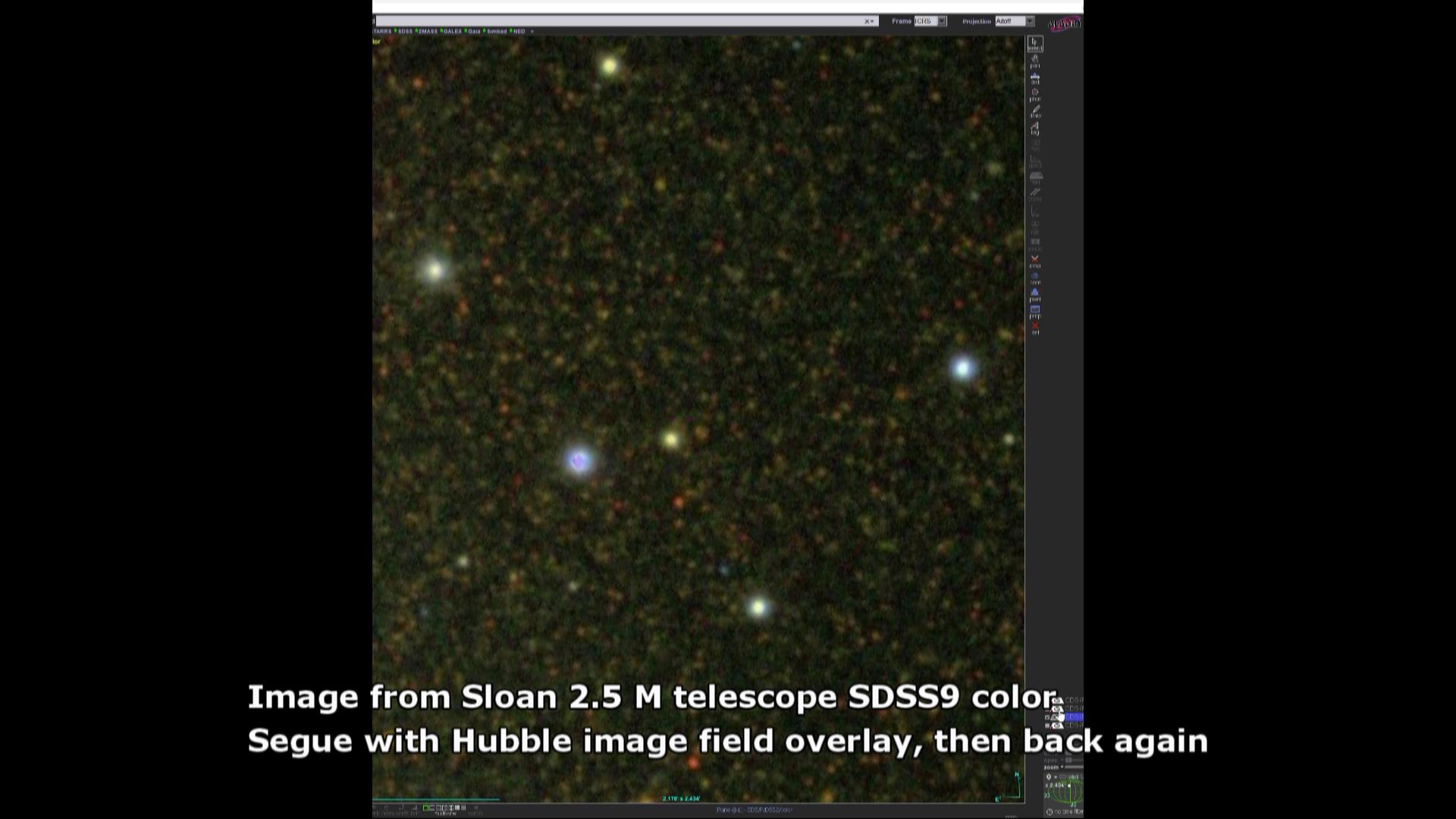 📷 SnapShot(2).jpg
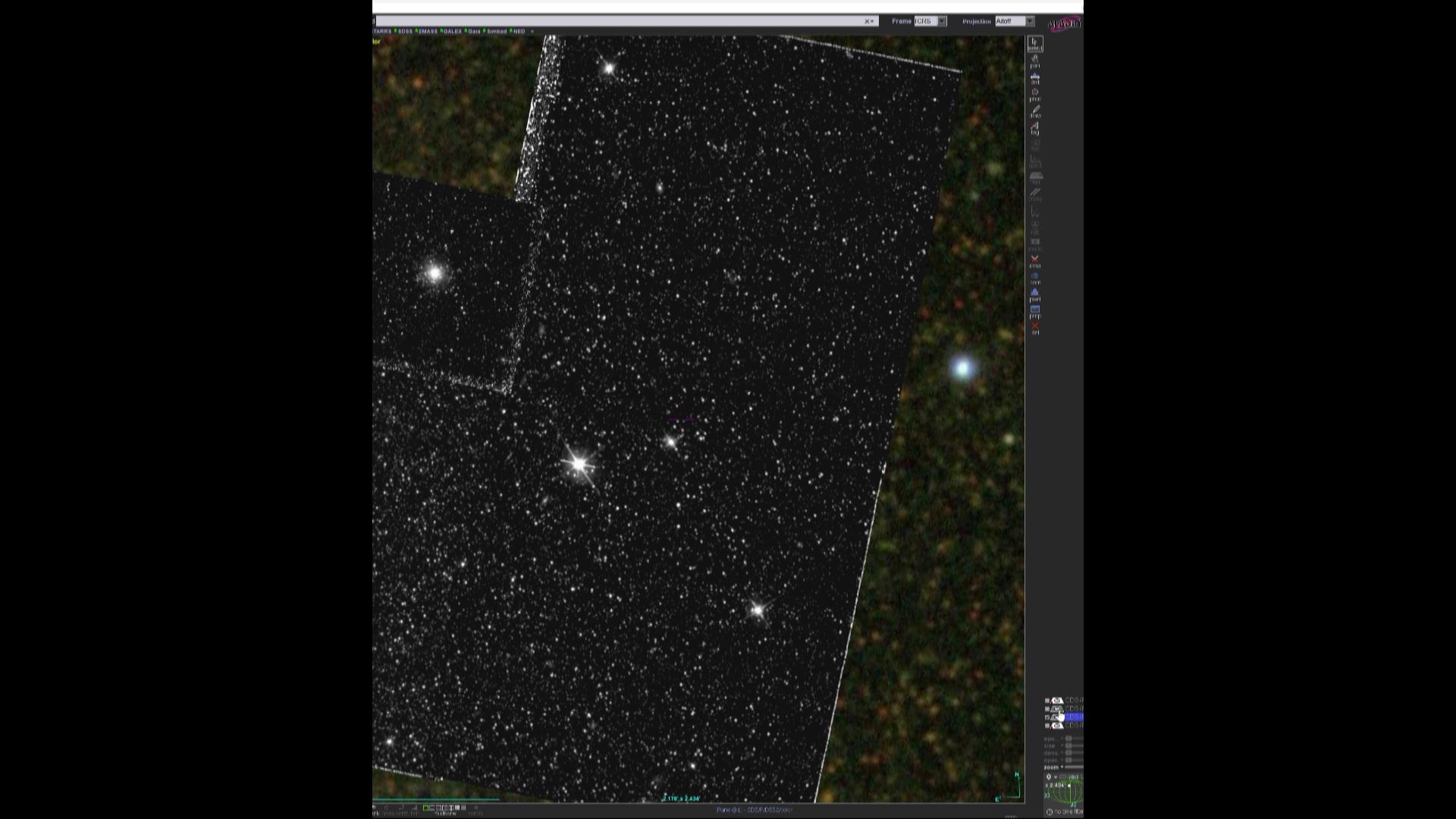 A neat bonus here is the presence of a globular cluster at 10 o’clock, only proven with the Hubble image!
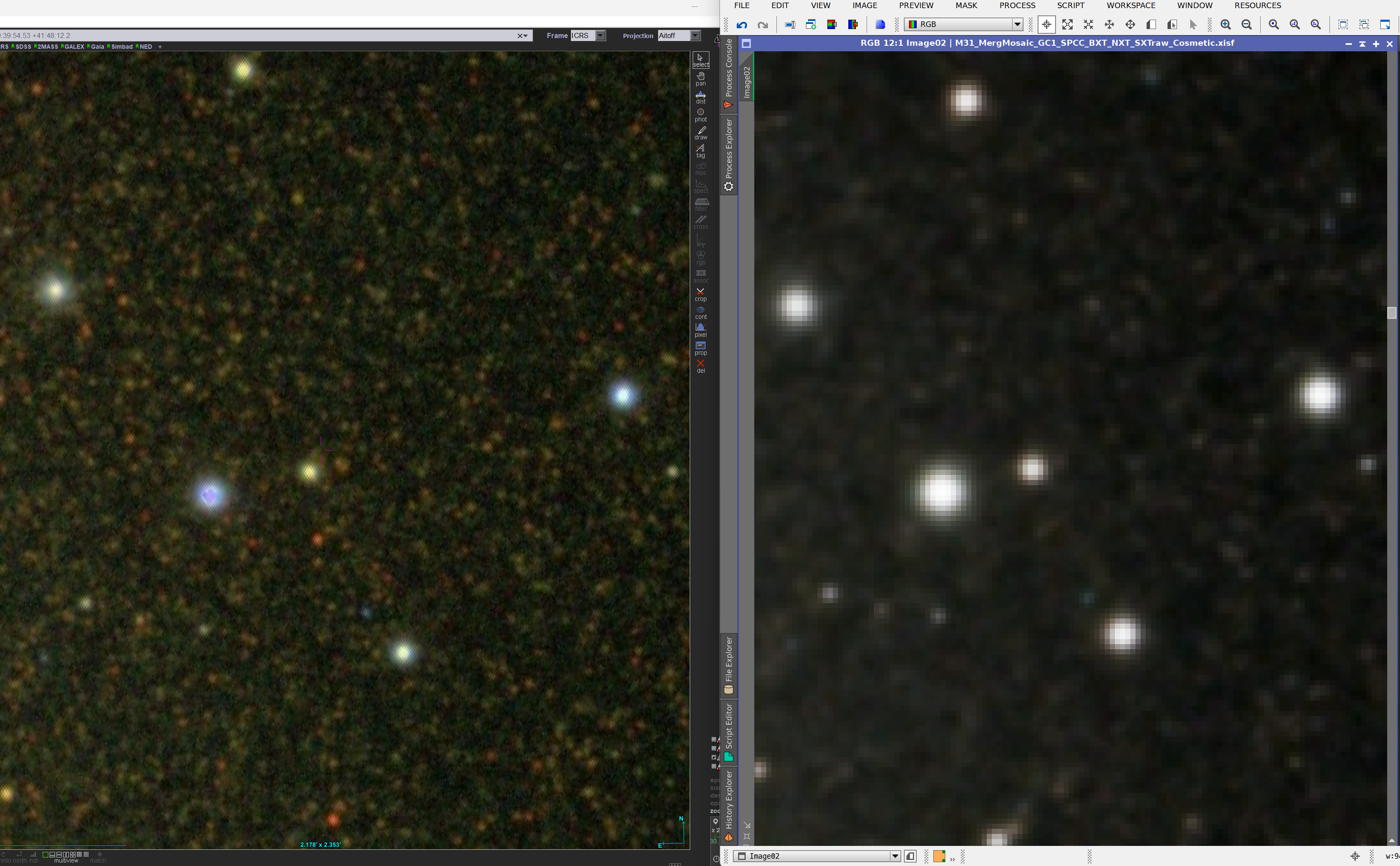 To support this idea of a galaxy being a collection of stars, I zoom out these views, leaving the view from above in the direct center of the fields for both data. See below:
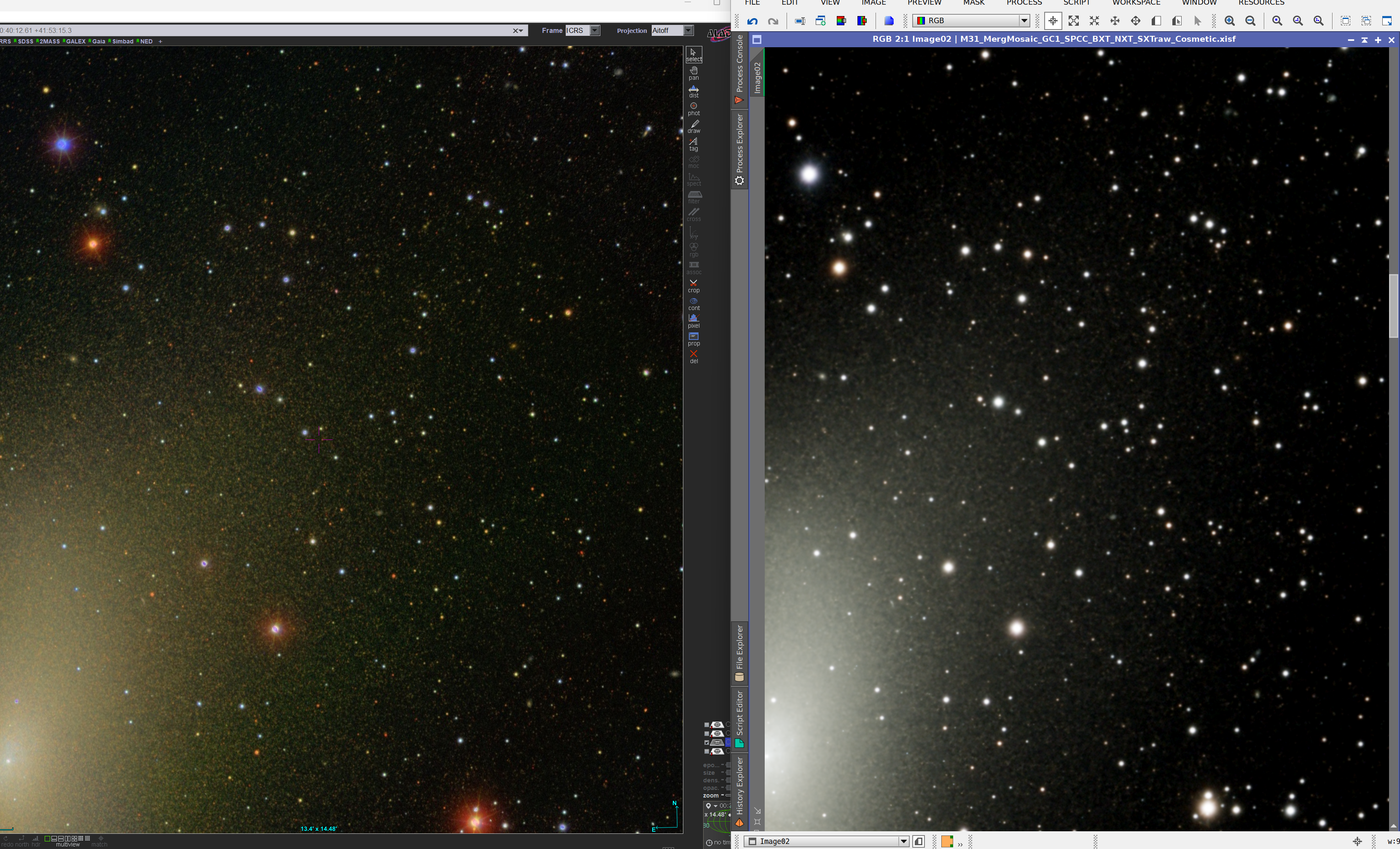 You can just barely see the core of M110 in the lower right of the images. Note, the more and more the resolution is improved in these two images and then finally the Hubble, the deeper and deeper one can see discrete stars, or at least discrete point light sources. The RASA being the worst, as one might expect.

